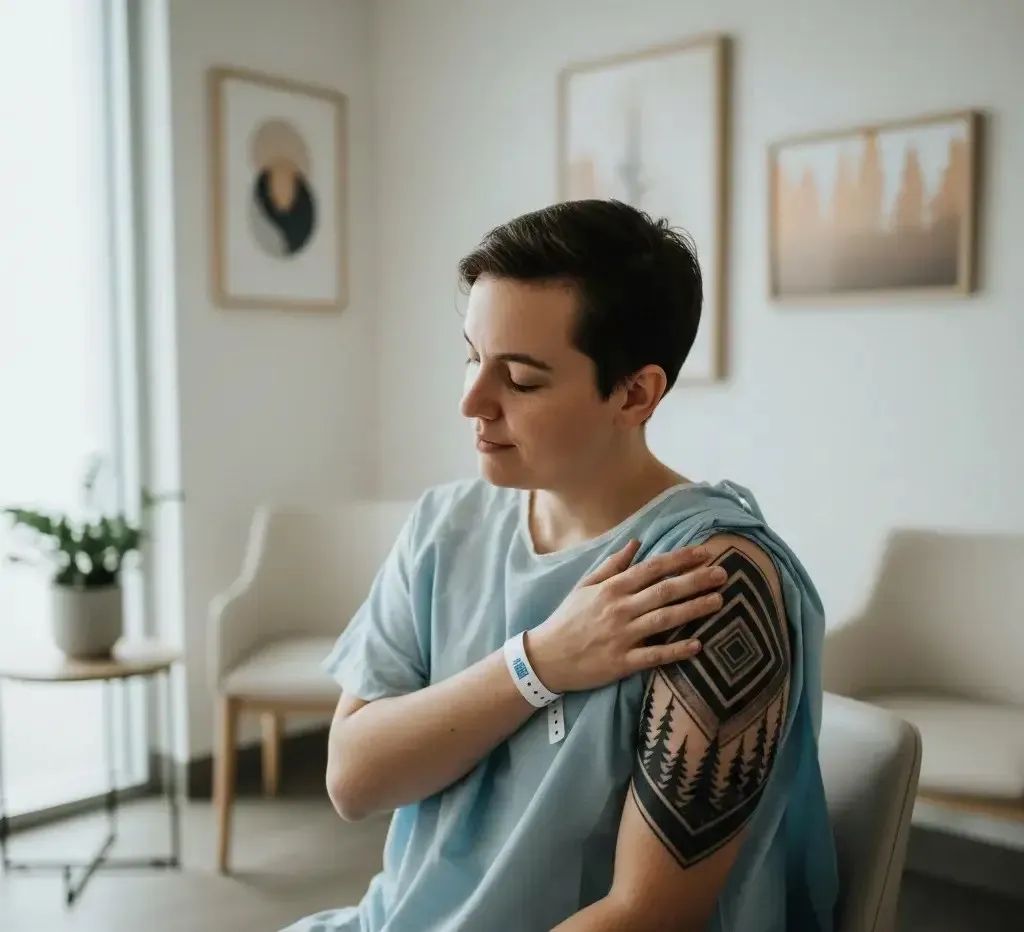
Thinking about getting a tattoo but just found out you’re about to start chemotherapy? You’re not alone.
This is a very common and emotional question, and many people ask themselves, “can you get a tattoo before starting chemo?”
A tattoo can carry deep meaning, memories, or strength during a hard time—but your health comes first.
Before making any decision, it’s important to understand what a tattoo really does to your body and how chemo can change the way your skin heals.
Chemotherapy puts a lot of stress on your immune system, and even a small tattoo is still an open wound.
What normally heals easily can turn into a serious problem when your body is preparing for treatment.
That’s why knowing the risks, healing time, and medical advice matters so much.
In this guide, we’ll break everything down in simple, clear language so you can make a safe, informed choice without confusion or fear.
Can You Get a Tattoo Before Starting Chemo Safely?
Many people wonder if it is okay to get a tattoo before starting chemotherapy. In general, it is not considered safe for most patients.
Chemotherapy weakens your immune system, and even before treatment starts, your body may already be under stress.
A tattoo is an open wound, and your body needs strong healing power to close it properly. If healing is slow or incomplete, problems can appear once chemo begins.
Even if you feel healthy, hidden risks still exist. Doctors usually advise waiting because safety always comes first. Your health journey is more important than body art at this time.
Is It Medically Safe to Get a Tattoo Right Before Chemotherapy?
From a medical point of view, getting a tattoo right before chemotherapy is strongly discouraged. Doctors worry about infection, delayed healing, and skin damage.
Chemotherapy lowers white blood cells, which help fight germs. If your skin is healing from a tattoo, it becomes an easy entry point for bacteria.
Even a small infection can turn serious during chemo. Medical safety depends on timing, immune strength, and skin health.
Most oncologists suggest avoiding tattoos weeks or months before treatment. This advice helps protect you from preventable complications.
Why Do Doctors Warn About Getting a Tattoo Before Chemo?
Doctors warn against tattoos before chemo because they see real risks in patients. A tattoo damages the skin barrier, which normally protects your body.
Before chemo, your immune system may already be preparing for treatment changes. Once chemo starts, healing slows down even more.
Doctors worry about infections spreading quickly. Skin reactions, swelling, or allergic responses to ink are also concerns.
These problems can interrupt cancer treatment plans. That is why doctors strongly recommend avoiding tattoos during this sensitive time.
How Does Chemotherapy Affect Tattoo Healing?
Chemotherapy affects tattoo healing by slowing down your body’s natural repair process. Healing needs healthy blood flow, strong immunity, and active skin cells. Chemo reduces all three.
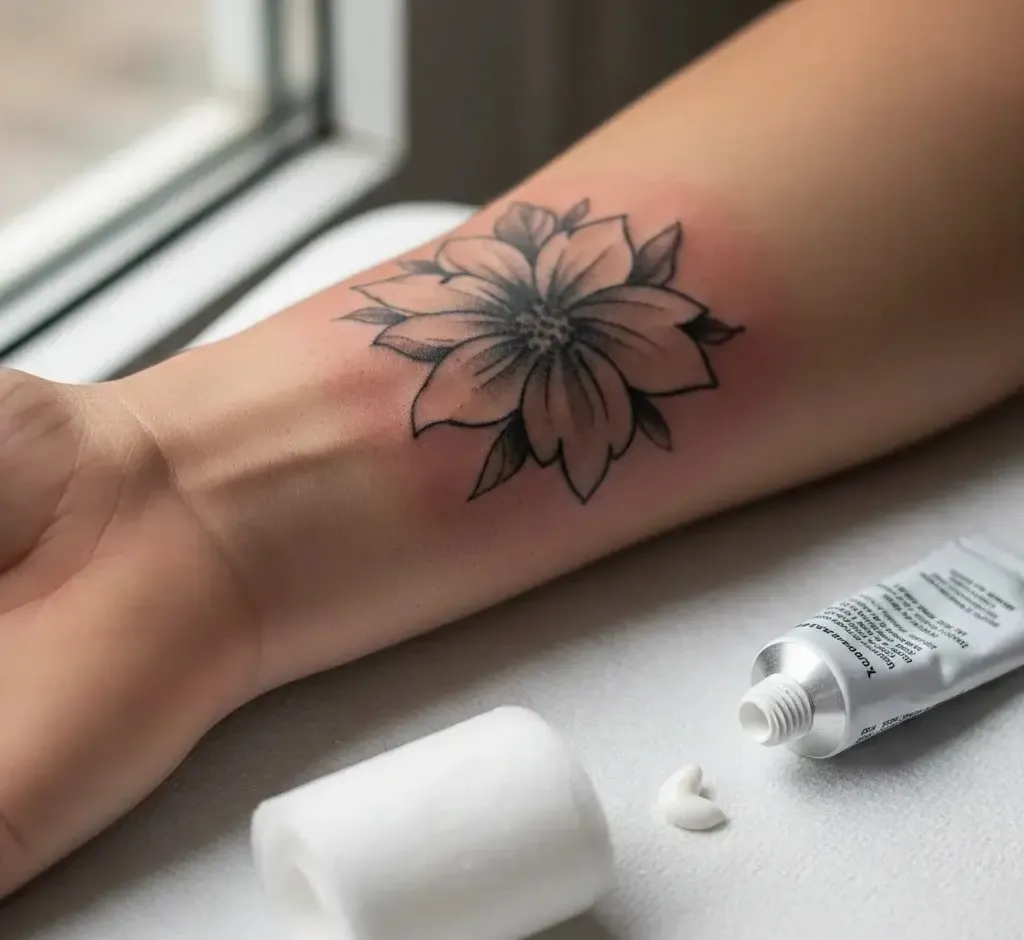
A tattoo that normally heals in 2–4 weeks may take much longer. Scabbing can stay longer, redness may increase, and ink may fade or blur.
There is also a higher chance of scarring. If healing is not complete before chemo, complications can worsen. This is why timing matters so much with tattoos and cancer treatment.
What Are the Risks of Getting a Tattoo Before Starting Chemo?
Getting a tattoo before chemo comes with several risks that should not be ignored. These risks can affect both your skin and your treatment plan.
Main risks include:
- Skin infection that spreads quickly
- Delayed or poor wound healing
- Increased pain and swelling
- Allergic reaction to tattoo ink
- Risk of scarring or tattoo damage
- Possible delay in starting chemo
Even one small risk can become serious during chemotherapy. That is why doctors advise extreme caution.
Can a Tattoo Increase Infection Risk Before Chemotherapy?
Yes, a tattoo can greatly increase infection risk before chemotherapy. A tattoo creates tiny wounds in the skin. These wounds are open doors for bacteria.
Even with a clean tattoo studio, germs can still enter. Before chemo, your immune system may already be weaker than normal.
Once chemo begins, your body may struggle to fight infection. What starts as mild redness can turn into fever or blood infection.
This is why doctors often say “no tattoos” before chemo. Preventing infection is a top priority.
How Soon Before Chemo Is It Unsafe to Get a Tattoo?
There is no exact safe timeline, but most doctors recommend not getting a tattoo within at least 6–8 weeks before chemo.
Healing must be 100% complete before treatment begins. Even if your tattoo looks healed on the surface, deeper skin layers may still be repairing.
Chemo can interrupt this hidden healing process. If healing is not finished, risks increase.
Every patient is different, so doctors may suggest longer waiting times. Always talk to your oncologist before making a decision.
Does Chemo Weaken the Immune System After a New Tattoo?
Chemotherapy significantly weakens the immune system, especially after a new tattoo. Your body needs immune cells to heal skin and fight bacteria.
Chemo reduces these cells. If you have a fresh tattoo, your body may not protect it properly. This can lead to redness, pus, fever, or severe infection.
Even minor skin issues can become dangerous. This weakened immune response is one of the biggest reasons tattoos are discouraged. Protecting your immune system helps ensure smoother cancer treatment.
What Happens If a Tattoo Gets Infected Before Chemo?
If a tattoo gets infected before chemo, it can become a serious medical issue. Infection symptoms may worsen quickly once treatment starts.
You may experience pain, swelling, heat, pus, or fever. Doctors may need to delay chemo until the infection clears.
Antibiotics may be required, which can stress your body further. In severe cases, hospital care may be needed.
An infected tattoo can slow down your cancer care journey. That is why prevention is always better than treatment.
Are Certain Tattoo Placements Riskier Before Chemotherapy?
Yes, some tattoo placements are riskier than others before chemo. Areas with poor blood flow heal more slowly.
These include ankles, feet, hands, and lower legs. Tattoos near lymph nodes or medical ports are also risky.
Friction areas like waist, underarms, or chest may get irritated easily. Slower healing means higher infection risk.
Doctors usually advise avoiding tattoos anywhere on the body before chemo. Placement does not fully remove the risk during this time.
Can You Get a Small Tattoo Before Chemo or Is Any Size Risky?
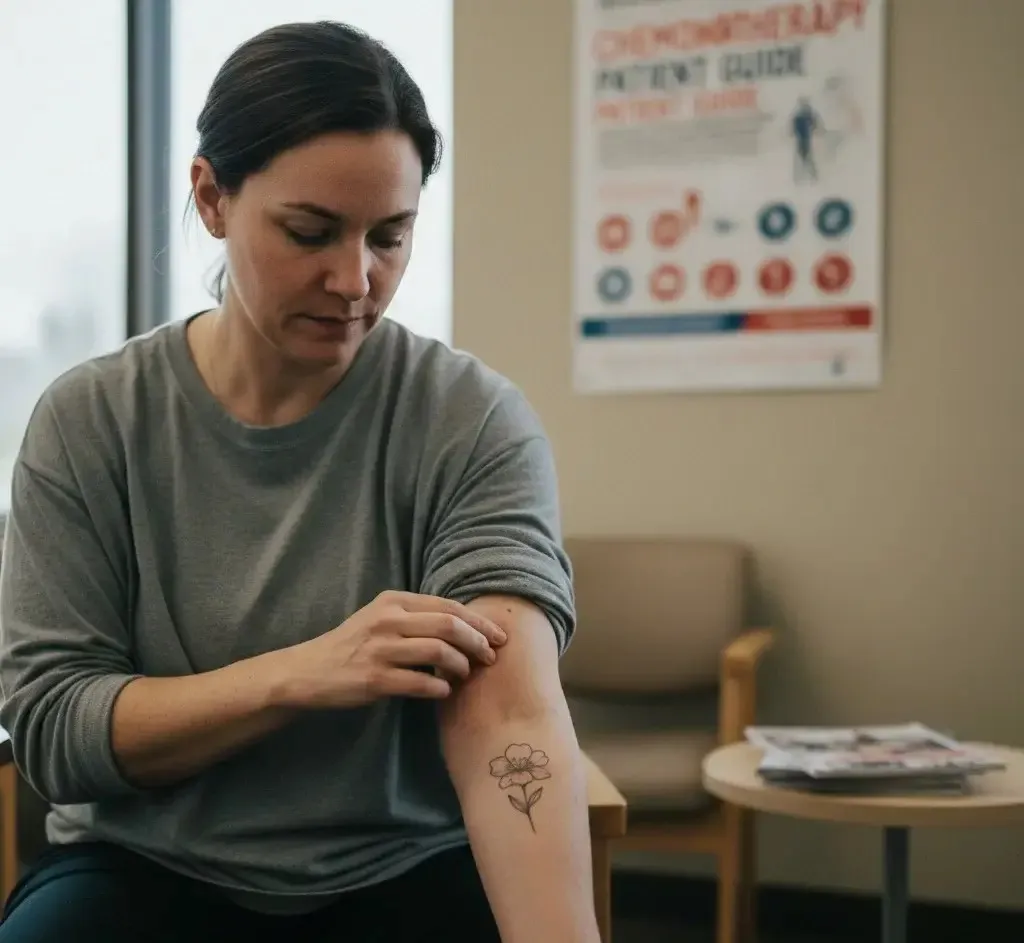
Even a small tattoo carries risk before chemotherapy. Size does not change the fact that skin is being injured. A tiny tattoo can still become infected or heal poorly.
Chemotherapy does not care about tattoo size—it affects your whole body. Small tattoos may seem safer, but they still open the skin.
Doctors do not recommend “testing” with a small tattoo. It is best to wait until treatment is over and your immune system recovers.
What Symptoms After a Tattoo Are Dangerous Before Chemo?
Some symptoms after a tattoo should never be ignored, especially before chemo.
Warning signs include:
- Increasing redness or swelling
- Severe pain or warmth
- Yellow or green discharge
- Fever or chills
- Red streaks spreading on skin
- Tattoo not healing after weeks
If you notice these symptoms, seek medical help immediately. These signs can become serious during chemotherapy.
How Long Does a Tattoo Take to Heal Before Chemotherapy Starts?
A tattoo usually takes 2–4 weeks to heal on the surface. However, full skin healing can take 6–8 weeks or longer. Deep layers of skin repair slowly.
Chemotherapy can interrupt this process at any stage. Even if the tattoo looks fine, hidden healing may still be happening.
Doctors prefer tattoos to be fully healed long before chemo begins. Rushing healing can lead to problems. Always give your body enough time to recover.
What If You Already Got a Tattoo and Then Found Out You Need Chemo?
If you already got a tattoo and then learned you need chemo, do not panic. Tell your oncologist immediately. They will check the tattoo for healing and infection.
Follow strict aftercare instructions. Keep the area clean and dry. Watch closely for warning signs. Your doctor may delay chemo slightly if needed.
Early communication helps prevent complications. Many patients manage this safely with medical guidance.
How Can You Protect a New Tattoo If Chemo Is About to Start?
If chemo is starting soon and you have a new tattoo, protection is critical.
Helpful steps include:
- Keep the tattoo very clean
- Avoid scratching or picking
- Use only doctor-approved ointments
- Avoid tight clothing over tattoo
- Monitor daily for infection signs
- Inform your medical team immediately
These steps reduce risk but do not remove it completely. Medical advice is essential.
What Do Oncologists Say About Tattoos Before Starting Chemo?
Most oncologists strongly advise against tattoos before starting chemo. Their main concern is patient safety. They see how quickly small problems can grow during treatment.
Oncologists focus on reducing infection, avoiding treatment delays, and protecting immune health.
Many recommend waiting until chemo is finished and recovery begins. Their advice comes from experience, not fear.
Listening to your oncologist helps ensure the best possible treatment outcome.
Are There Safer Alternatives to Tattoos Before Chemotherapy?
Yes, there are safer ways to express yourself before chemo. Temporary tattoos are a popular option. Henna (with safe, natural ingredients) can be considered with doctor approval.
Body art stickers or makeup designs are also options. These do not break the skin. They allow self-expression without health risks.
Choosing safer alternatives protects your body during a vulnerable time. You can always get a permanent tattoo later.
When Is the Best Time to Get a Tattoo After Chemo Instead?
The best time to get a tattoo is after chemotherapy is fully completed and your doctor confirms recovery. Your immune system needs time to rebuild.
Blood counts should return to normal levels. Skin strength must be restored.
Many doctors recommend waiting several months after chemo. Getting approval from your oncologist is important.
Once your body is ready, tattoo healing will be safer and smoother. Patience protects your health and your tattoo.