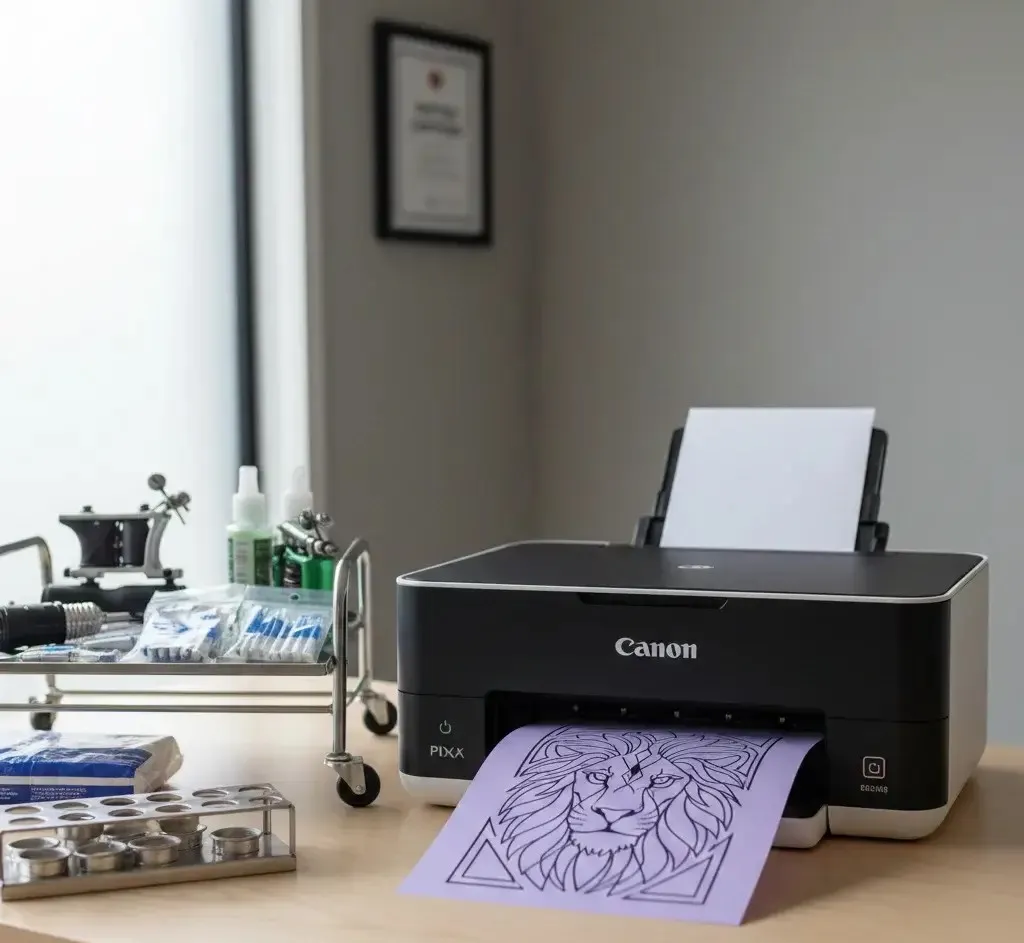
Can You Use A Regular Printer For Tattoo Stencils Safely?
Yes, you can use a regular printer for tattoo stencils, but safety depends on how you do it. A standard printer is not designed specifically for skin-related work, so extra care is required.
The main concern is ink safety, cleanliness, and stencil accuracy. If non-toxic inks and proper stencil paper are used, the process can be reasonably safe for temporary stencil transfer.
However, skipping hygiene steps or using unsuitable materials can increase skin irritation or infection risks.
This method is generally safer for practice, fake skin, or temporary designs rather than professional tattooing. Beginners should always take precautions and avoid shortcuts.
How Does Using A Regular Printer For Tattoo Stencils Work?
Using a regular printer for tattoo stencils works by printing a design onto special stencil paper instead of regular paper. The printer transfers the design using ink, which is then applied to the skin with stencil transfer gel or deodorant. Unlike thermal printers, regular printers rely on ink absorption, which can affect sharpness. The process usually involves:
- Preparing the design digitally
- Printing on stencil or transfer paper
- Applying transfer solution to the skin
- Pressing the stencil firmly for transfer
While simple, the method requires patience and correct materials to avoid blurred or faded stencils.
What Happens If You Use A Regular Printer For Tattoo Stencils Incorrectly?
Using a regular printer incorrectly can lead to unclear stencil lines and skin issues. Common problems include smudged designs, incomplete transfers, or ink bleeding once applied to the skin.
Incorrect paper choice can cause the stencil to fade quickly during tattooing. Poor hygiene can also introduce bacteria, increasing infection risk.
In some cases, incorrect ink may cause redness or allergic reactions. These issues don’t just affect appearance but can impact the entire tattoo process.
That’s why understanding proper steps is essential before using this method.
Can You Use A Regular Printer For Tattoo Stencils Without Special Ink?
You can technically use regular printer ink, but it is not ideal. Standard printer ink is not made for skin contact and may contain chemicals that irritate sensitive skin.
While many people do use it for practice or temporary stencils, it’s safer to use skin-safe stencil inks whenever possible. If regular ink is used, the stencil should not stay on the skin for long periods.
This method is best limited to learning, design placement testing, or fake skin practice. For professional or permanent tattoos, special inks are strongly recommended.

Is Using A Regular Printer For Tattoo Stencils Risky For Skin Health?
There is some risk to skin health when using a regular printer, especially if safety steps are ignored. Risks may include:
- Mild skin irritation
- Allergic reactions to ink
- Increased infection risk from poor hygiene
These risks rise when low-quality paper, unsafe ink, or unclean tools are used. Sensitive skin types are more vulnerable. Cleaning the skin properly and limiting stencil contact time can reduce problems. While not extremely dangerous, it is not the safest option compared to professional tattoo equipment.
Can You Use A Regular Printer For Tattoo Stencils At Home As A Beginner?
Yes, beginners often use regular printers at home because they are affordable and easy to access. This method allows learners to practice stencil placement and design scaling.
It helps beginners understand how stencils behave on skin before moving to professional tools. However, beginners should treat this as a learning method only.
Using proper stencil paper, gloves, and clean surfaces is very important. Practicing on fake skin first is highly recommended.
This approach helps avoid mistakes and builds confidence safely.
What Are The Common Problems When You Use A Regular Printer For Tattoo Stencils?
Several common problems can occur when using a regular printer:
- Blurry or faded lines
- Ink spreading on the paper
- Uneven stencil transfer
- Stencil rubbing off too quickly
These issues usually come from wrong printer settings, low-quality paper, or excess moisture on the skin. Unlike thermal printers, regular printers lack precision for stencil work. Adjusting printer quality to “high,” allowing ink to dry fully, and using correct transfer products can reduce these problems.
Can You Use A Regular Printer For Tattoo Stencils And Still Get Clear Line Work?
Clear line work is possible, but it requires extra effort. High-resolution designs and proper printer settings play a major role.
Using bold black lines instead of thin details improves clarity. Stencil paper quality also matters greatly.
Even with care, results may not match those from thermal printers.
This method works better for simple designs rather than complex or highly detailed tattoos. For clean results, patience and testing are essential.
Does Using A Regular Printer For Tattoo Stencils Affect Tattoo Healing Stages?
Indirectly, yes. If the stencil is poorly transferred, the tattoo artist may overwork the skin while correcting lines. Overworking can lead to longer healing times, scabbing, or uneven healing.
Ink irritation from unsafe materials may also slow healing. A clean, accurate stencil helps ensure smoother tattooing and better healing.
That’s why stencil quality matters even before the needle touches the skin.
Can You Use A Regular Printer For Tattoo Stencils On Sensitive Skin?
People with sensitive skin should be extra cautious. Regular printer ink can trigger redness, itching, or mild swelling. It’s best to do a patch test before full application.
Using fragrance-free stencil transfer solutions and limiting stencil contact time helps reduce reactions.
If irritation appears, the stencil should be removed immediately. For sensitive skin, professional stencil materials are always the safer option.
What Mistakes Should You Avoid When You Use A Regular Printer For Tattoo Stencils?
Avoiding common mistakes can prevent many issues:
- Using normal paper instead of stencil paper
- Not letting ink dry before transfer
- Applying stencil to wet or oily skin
- Skipping skin cleaning steps
Rushing the process often leads to poor results. Proper preparation and patience are key. Even small mistakes can ruin the stencil and affect the tattoo outcome.

Can You Use A Regular Printer For Tattoo Stencils Without Causing Ink Smudging?
Yes, ink smudging can be minimized with correct steps. Always let the printed stencil dry fully before use. Use a thin layer of stencil transfer gel, not too much.
Press the stencil gently but firmly, then remove it slowly. Avoid touching or wiping the stencil once applied. Keeping the skin dry afterward helps the design stay intact during tattooing.
How Can You Fix Blurry Designs When You Use A Regular Printer For Tattoo Stencils?
Blurry designs can often be fixed by adjusting settings and materials. Increase printer resolution and contrast in your design software.
Use thicker line weights instead of fine lines. Make sure the stencil paper is compatible with inkjet or laser printers.
Testing on paper before skin application helps catch issues early. Small adjustments can greatly improve stencil clarity.
Can You Use A Regular Printer For Tattoo Stencils Instead Of A Thermal Printer?
A regular printer can be used as an alternative, but it is not a replacement. Thermal printers are designed for precision, consistency, and professional results.
Regular printers are more suitable for practice, budget setups, or temporary use. Professionals usually prefer thermal printers for reliability.
If tattooing regularly, investing in proper equipment saves time and reduces mistakes.
What Aftercare Steps Matter If You Use A Regular Printer For Tattoo Stencils?
Aftercare starts even before tattooing begins. Clean the skin thoroughly after stencil removal if irritation appears. During tattoo healing, follow standard aftercare rules:
- Keep the area clean
- Avoid touching with dirty hands
- Use recommended healing ointments
If any unusual reaction occurs, stop tattooing and clean the area. Proper aftercare helps prevent complications caused by stencil materials.
Can You Use A Regular Printer For Tattoo Stencils Without Increasing Infection Risk?
Yes, but only with strict hygiene. Always sanitize tools, wear gloves, and use clean surfaces. Never reuse stencil paper or apply it to broken skin.
Infection risk increases when cleanliness is ignored, not because of the printer itself. Treat the process with professional-level care to stay safe.
How Long Do Stencils Last When You Use A Regular Printer For Tattoo Stencils?
Stencils made with regular printers usually last a shorter time. They may fade within 30–60 minutes, especially if the skin sweats or is wiped frequently.
This makes them less ideal for long tattoo sessions. Applying a stencil sealer spray can help extend durability. Quick and careful tattooing improves results.
Can You Use A Regular Printer For Tattoo Stencils And Prevent Design Fading?
Design fading can be reduced by using high-quality stencil paper and bold designs. Avoid excessive wiping during tattooing. Let the stencil set for a few minutes before starting.
Keeping the skin dry and cool also helps. While some fading is expected, careful preparation keeps the design visible longer.
What Do Professional Tattoo Artists Say About Using A Regular Printer For Tattoo Stencils?
Most professional tattoo artists view regular printers as a temporary or beginner solution. They acknowledge it can work for practice and learning.
However, professionals prefer thermal printers for accuracy, speed, and hygiene.
Many artists recommend upgrading once tattooing becomes serious. The consensus is that regular printers are useful, but limited.
When Should You Avoid Using A Regular Printer For Tattoo Stencils Completely?
You should avoid this method when:
- Tattooing professionally on clients
- Working on sensitive or damaged skin
- Creating highly detailed designs
- Long sessions are required
In these cases, professional stencil equipment is safer and more reliable. Choosing the right tool protects both the artist and the client. Knowing when not to use a regular printer is just as important as knowing how to use one.