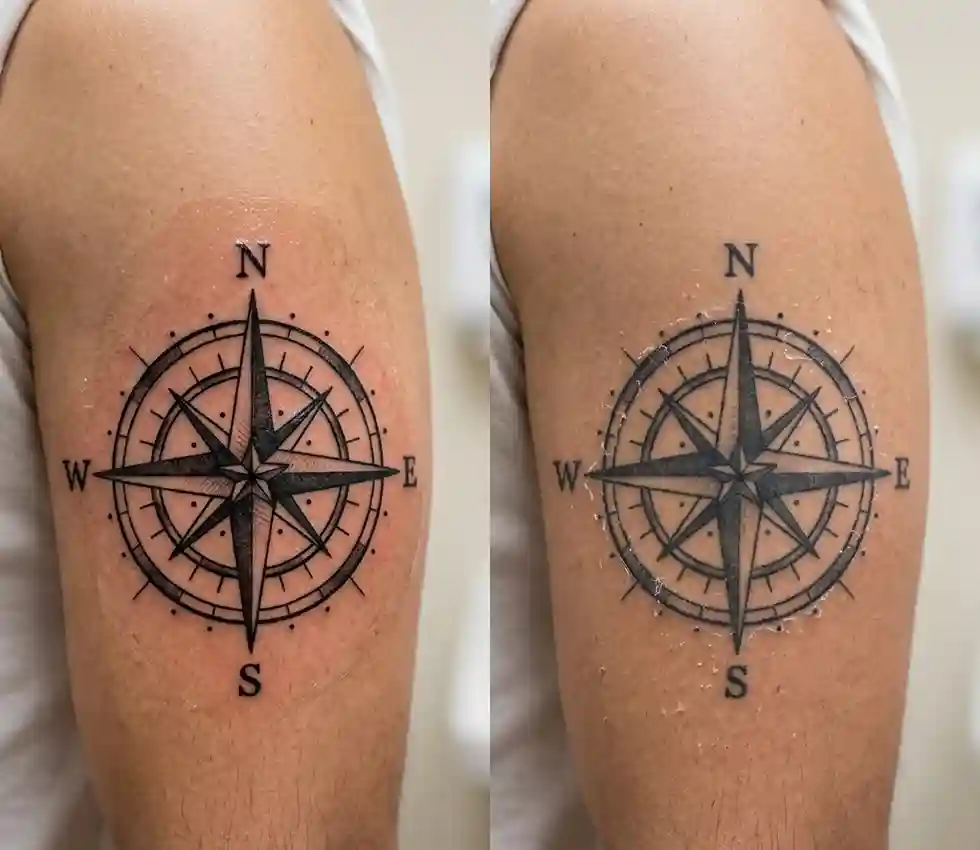
You just got a new tattoo, and now it looks lighter than it did on day one. The bold black seems softer.
The colors don’t look as bright. So naturally, you start to worry did something go wrong? Do Tattoos Lighten As They Heal, or is your ink actually fading away?
The truth is, some lightening during healing is completely normal. Your skin goes through different stages as it repairs itself, and that can temporarily change how your tattoo looks.
In this guide, you’ll learn exactly why tattoos appear lighter, what’s normal, what’s not, and how to make sure your ink heals strong and vibrant.
Do Tattoos Lighten As They Heal?
Yes, tattoos often look lighter while they heal, and in most cases, this is completely normal.
Right after your appointment, your tattoo appears bold and very dark because the skin is fresh, slightly swollen, and coated with ointment.
As the top layer of skin begins to repair itself, a thin layer of healing skin forms over the ink.
This can temporarily make the design look cloudy, dull, or lighter than expected. Once healing is complete and the outer layer settles, the color usually becomes clearer and more defined.
However, slight softening of color is part of the natural healing process. Understanding this helps reduce unnecessary panic during the first few weeks.
Why Do Tattoos Look Lighter During the Healing Process?
Tattoos can look lighter because your skin is actively repairing itself. During healing, your body produces new skin cells that temporarily sit over the ink.
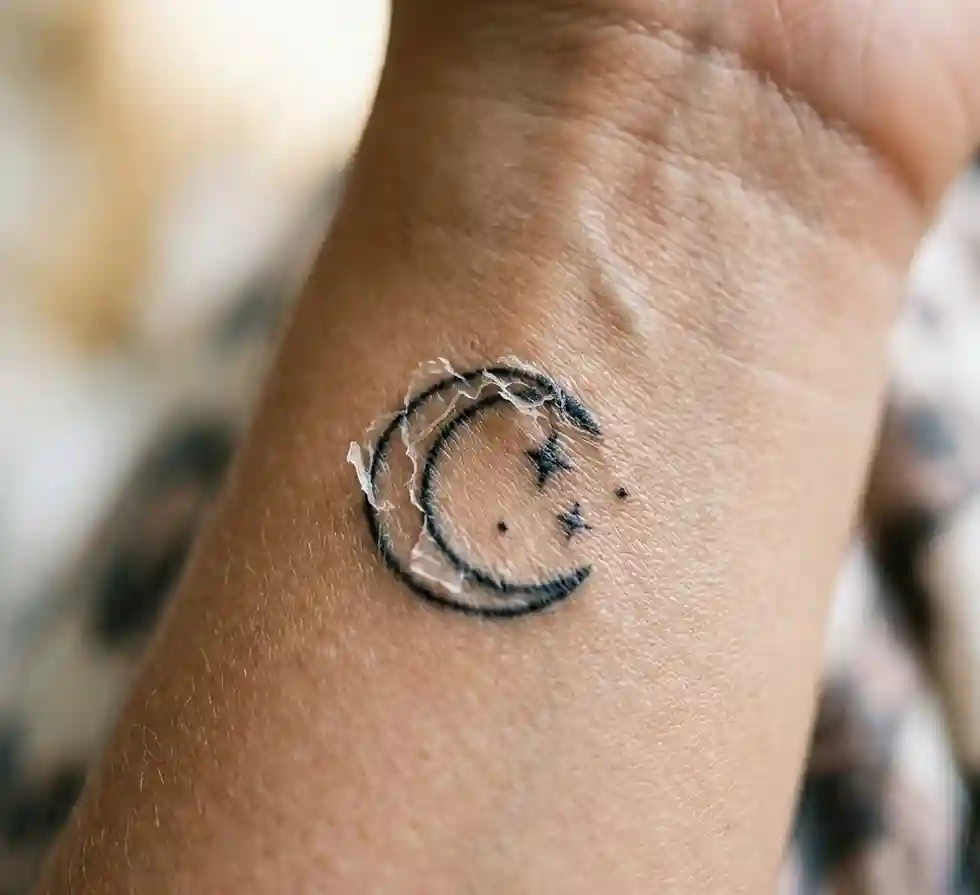
This creates a hazy or milky appearance often called the “silver skin” stage. Peeling and flaking also remove excess surface ink and dried plasma, which can make the tattoo seem faded.
Mild dryness can exaggerate this lighter look as well. Inflammation from the initial session goes down, reducing that deep, saturated appearance.
Once the skin barrier fully recovers, the tattoo’s true tone becomes more visible and balanced.
Is It Normal for a New Tattoo to Fade While Peeling?
Yes, slight fading during peeling is very common. When your tattoo peels, it sheds dead skin cells along with extra surface pigment that didn’t fully settle.
This does not mean the ink inside your dermis is disappearing. Peeling is similar to a mild sunburn flake and is part of normal recovery.
At this stage, the tattoo may look patchy or uneven. Avoid picking or pulling flakes, as that can cause real ink loss.
Letting the skin peel naturally ensures the pigment underneath remains intact. After peeling ends, the design typically looks more even again.
What Happens to Tattoo Ink During Each Healing Stage?
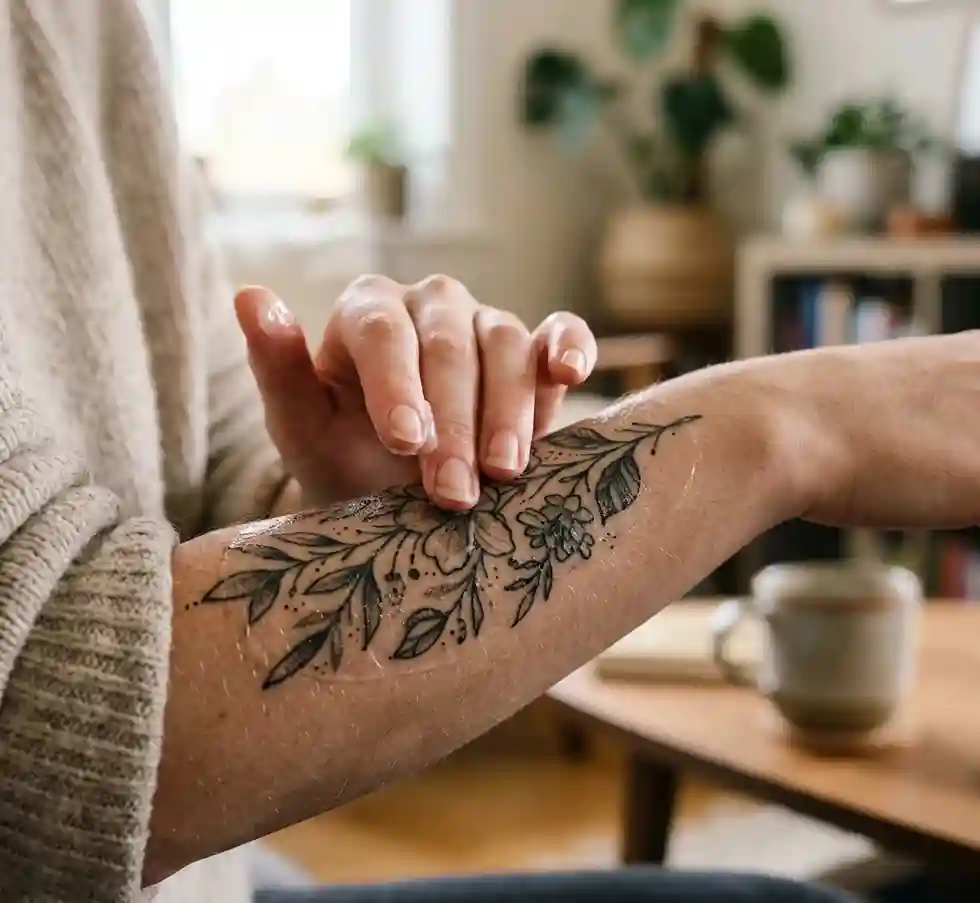
Tattoo healing happens in clear phases, and each one affects how your tattoo looks:
1. Fresh Stage (Days 1–4)
- Tattoo appears bold, dark, and shiny.
- Some redness and swelling are normal.
2. Peeling Stage (Days 5–14)
- Skin flakes and feels itchy.
- Tattoo may look dull or lighter.
3. Settling Stage (Weeks 3–6)
- A thin healed layer forms over the ink.
- Colors appear softer but more natural.
The ink remains in the dermis throughout. What changes is the condition of the skin above it. Once healing finishes, the tattoo stabilizes in tone.
Do Tattoos Get Darker Again After They Finish Healing?
In many cases, tattoos appear slightly richer after full healing compared to the peeling stage. During peeling, dryness and flaking create a faded illusion.
Once the outer layer smooths out, light reflects more evenly off the skin, improving clarity. However, they may not look as extremely bold as the first day.
That ultra-dark look right after tattooing is partly due to swelling and excess ink on the surface.
The final healed result is usually a bit softer but clean and defined. Proper moisturizing can also enhance vibrancy long-term.
How Long Does It Take for a Tattoo to Reach Its True Color?
Most tattoos take about 4 to 6 weeks to show their true settled color. Surface healing may finish in two weeks, but deeper layers continue repairing for several more weeks.
During this time, the tattoo may shift slightly in appearance. Full skin regeneration ensures the ink looks consistent and balanced.
Larger or heavily shaded tattoos may take closer to two months.
Patience is important because judging color too early can cause unnecessary concern. After full healing, you’ll see the final tone and clarity.
Can Dry Skin Make a Healing Tattoo Look Faded?
Yes, dryness is one of the biggest reasons a tattoo looks lighter than it actually is. When skin lacks moisture, it becomes flaky and dull.
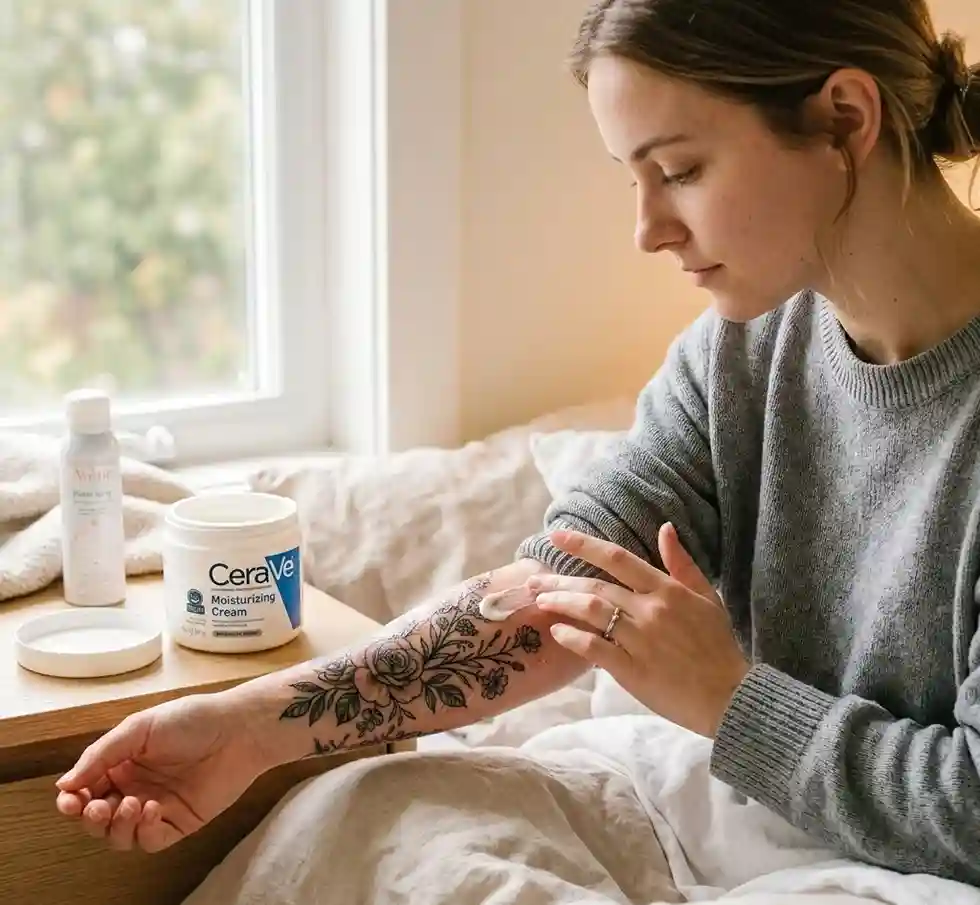
This blocks light from reflecting properly, muting the ink underneath. Keeping the area lightly moisturized helps restore depth and sharpness.
However, over-moisturizing can clog pores and slow healing. Use a thin layer of fragrance-free lotion as recommended by your artist.
Hydrated skin keeps the tattoo looking healthier and more vibrant during and after healing.
Does Scabbing or Peeling Cause Tattoos to Lose Color?
Light peeling is normal and does not remove deep ink. However, thick scabbing can sometimes pull out pigment if it cracks or gets picked.
Heavy scabbing usually happens due to trauma, overworking of the skin, or improper aftercare. If scabs are forced off early, small patches of ink may lift.
That’s why gentle cleaning and proper moisture balance are essential. Never scratch or peel flakes manually. If minor color loss occurs, a touch-up can usually correct it easily.
What Are the Signs of Normal Healing vs. Color Loss?
It’s important to know the difference between normal fading and actual ink loss.
Normal Healing Signs:
- Temporary dull or cloudy look
- Light peeling and mild itching
- Even softening of color
Possible Color Loss Signs:
- Patchy blank spots
- Uneven faded sections
- Thick scabs pulling away pigment
If fading appears uniform, it’s usually part of healing. Uneven pigment gaps may require a professional check.
Can Overwashing Make Tattoos Lighten As They Heal?
Yes, overwashing can irritate the skin and slow healing. Washing too frequently strips natural oils that protect the tattoo.
This can cause dryness, cracking, and even minor ink disruption. Clean your tattoo gently 2–3 times a day with mild, fragrance-free soap.
Pat it dry instead of rubbing. Excessive scrubbing or harsh cleansers can damage delicate healing skin. Balanced hygiene keeps the ink secure while preventing infection.
Does Using Too Much Ointment Affect Tattoo Color?
Applying too much ointment can suffocate the tattoo. Thick layers trap moisture and prevent oxygen from reaching the skin.
This may cause soggy scabs and increase the risk of ink pulling out. A thin, breathable layer is enough to prevent dryness.
After the first few days, switching to a light lotion is often better. Proper product balance supports clean healing and stable pigment retention.
Can Sun Exposure Cause a New Tattoo to Fade Quickly?
Yes, sun exposure is one of the fastest ways to fade a healing tattoo. UV rays break down ink particles and damage sensitive skin.
A fresh tattoo is especially vulnerable because the protective barrier isn’t fully restored. Direct sunlight can cause discoloration or uneven fading.
Keep your tattoo covered when outdoors during healing. After healing, use a high-SPF sunscreen regularly. Sun protection is key to maintaining long-term vibrancy.
Do Certain Ink Colors Fade Faster During Healing?
Some ink colors naturally appear lighter once healed. For example:
- Yellow and pastel shades may soften significantly.
- Light gray and fine-line work can appear subtle.
- Watercolor styles often heal softer by design.
Darker inks like black and deep blue typically hold stronger contrast. Skin tone also affects how colors appear after healing. Choosing an experienced artist ensures proper saturation for your complexion.
Is It Possible to Lose Ink Permanently While Healing?
Yes, but it’s usually due to complications rather than normal healing. Infection, severe scabbing, allergic reactions, or picking at the tattoo can remove pigment.
Poor technique during the tattoo session may also cause shallow ink placement. If the ink isn’t deposited deep enough, it may fade unevenly.
Most minor color loss can be corrected with a touch-up session after healing. Proper aftercare greatly reduces permanent fading risks.
How Can You Prevent Tattoos from Fading During Healing?
To protect your tattoo while it heals:
- Follow your artist’s aftercare instructions carefully.
- Wash gently and avoid harsh products.
- Apply a thin layer of recommended moisturizer.
- Avoid swimming pools and hot tubs.
- Keep the tattoo out of direct sun.
- Do not scratch or peel flakes.
Consistency during the first month makes a huge difference in final color retention.
What Aftercare Steps Help Maintain Tattoo Vibrancy?
Long-term vibrancy depends on daily care even after healing. Keep your skin hydrated with a quality lotion. Always apply sunscreen before sun exposure.
Avoid rapid weight changes that stretch skin dramatically. Exfoliate gently only after full healing to keep skin smooth.
Healthy skin supports bold ink. Taking care of your body directly benefits your tattoo’s appearance.
When Should You Worry About a Tattoo Looking Too Light?
You should consider contacting your artist if:
- Large sections look completely blank.
- The tattoo appears patchy after 6–8 weeks.
- Signs of infection are present (pus, severe redness, fever).
If the lightness is even and occurs during peeling, it’s usually normal. Waiting until full healing is complete before judging results is important. Most artists recommend reviewing the tattoo after one month.
Can Poor Aftercare Lead to Uneven Tattoo Fading?
Absolutely. Picking scabs, overexposure to water, skipping moisturizer, or heavy sun exposure can cause uneven fading.
Inconsistent care may affect certain areas more than others. Tight clothing rubbing against the tattoo can also disrupt healing.
Following proper aftercare reduces the risk of patchiness. If uneven fading happens, a touch-up can restore balance. Prevention, however, is always easier than correction.
Do Touch-Ups Fix Tattoos That Healed Too Light?
Yes, touch-ups are common and very effective. Many artists include a free or low-cost touch-up within a few months of the original session.
During this appointment, faded areas are reinforced with fresh pigment. Once fully healed again, the tattoo typically looks more solid and vibrant.
Touch-ups are especially helpful for fine lines or light color work. Waiting until the tattoo is fully healed ensures safe and accurate correction.
What Do Tattoo Artists Say About Tattoos Lightening As They Heal?
Most professional tattoo artists confirm that some lightening is normal. They often explain that tattoos look bold on day one but settle into a softer version after healing.
Artists expect mild fading as part of the skin’s recovery process. However, they also stress the importance of proper aftercare to protect the ink.
According to expert advice, patience during healing prevents unnecessary stress. Trusting the process and communicating with your artist ensures the best long-term results.
Final Thoughts
In simple words, Do Tattoos Lighten As They Heal? Yes, they often do but in most cases, it’s a normal part of the healing process.
As your skin repairs itself, peeling, dryness, and a thin new skin layer can make the tattoo look lighter or dull for a short time.
Once healing is complete, the color usually settles and looks more even and natural. The key is proper aftercare, patience, and protecting your tattoo from sun and damage.
If fading looks patchy or extreme, a small touch-up can fix it. Trust the healing process, take good care of your skin, and your tattoo will stay bold for years.
Click Here To See More Blogs:
- 20 Powerful Irish Tattoos For Men And Women You’ll Love
- Best Tattoo Kits For Beginners: Safe & Easy Starter Kits For Learning Tattooing
- Tattoo Scab Came Off And No Ink Underneath: Causes, Solutions & Aftercare Tips
- Top 17 Cinderella Tattoo Designs You’ll Fall In Love With
- Can You Get A Tattoo At 16
- 15 Beautiful Beauty And The Beast Tattoo Designs You’ll Love
- How To Cover A Tattoo For Sports: Safe Tips To Protect & Heal Your Ink
- How Do I Know If My Tattoo Is Infected? Signs, Symptoms, And What To Do
- How To Lighten Dark Shading On A Tattoo: Easy Tips For Softer, Balanced Ink
- Best Adjustable Stroke Tattoo Machine: Expert Tips & Guide
- How To Cancel A Tattoo Appointment Without Stress Or Awkwardness
- 18 Strawberry Shortcake Tattoo Ideas So Cute You’ll Smile
- Can I Get A Tattoo With Keratosis Pilaris
- How To Lighten A Tattoo With White Ink Safely And Correctly
- 16 Stunning Snowdrop Flower Tattoo Designs With Hidden Meanings
- Top 15 I Love You Tattoo Designs Couples Are Loving