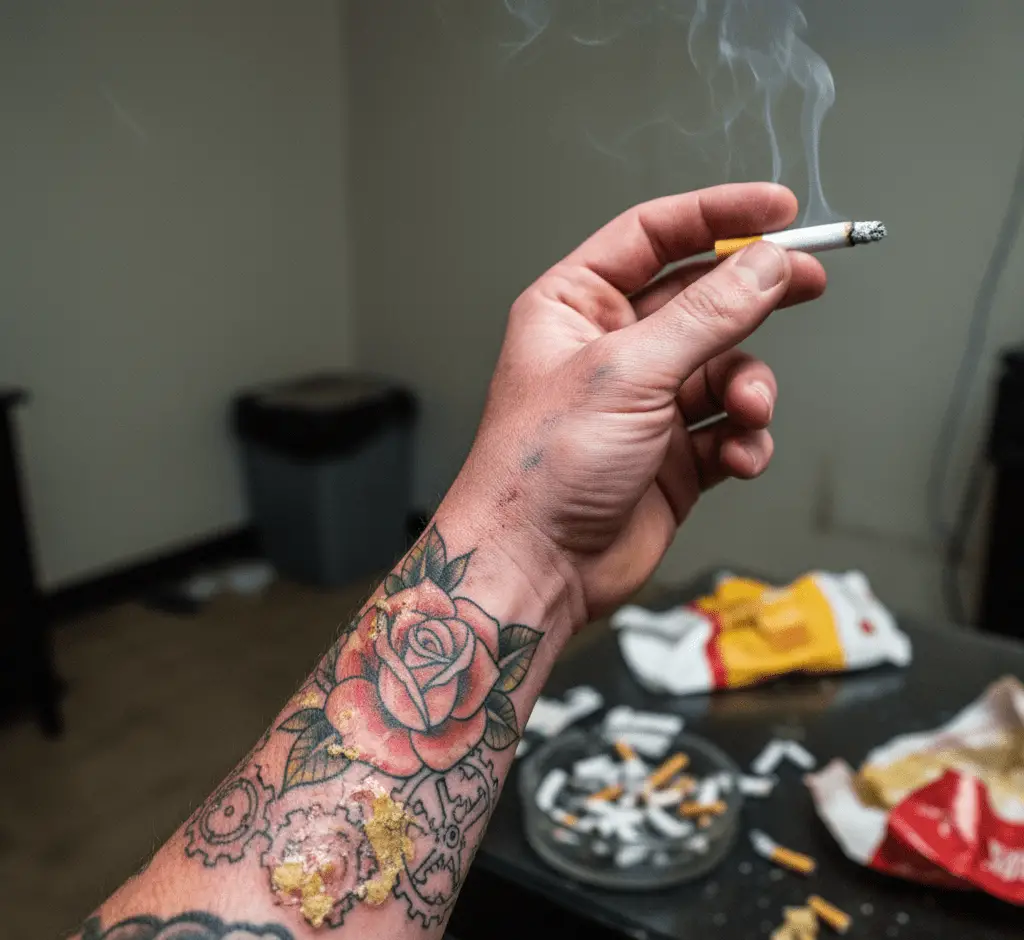
Are you worried that your new tattoo might not heal properly? Many people wonder, does smoking affect tattoo healing and the short answer is yes—it can.
Smoking slows down blood flow, reduces oxygen in your skin, and increases the risk of infection, all of which make it harder for a fresh tattoo to heal.
When you get a tattoo, your skin is essentially a small wound that needs care and nutrients to recover.
Smoking introduces chemicals into your body that interfere with this process, which can lead to fading, scabs, or uneven colors.
Understanding how smoking impacts your tattoo is key to keeping your new ink looking vibrant and healthy.
How Does Smoking Impact the Tattoo Healing Process?
Smoking reduces blood flow in your body, which means fewer nutrients and oxygen reach your tattoo. A tattoo needs a healthy blood supply to heal properly.
Smoking also increases the risk of slower skin repair, leaving your tattoo more prone to scabs, fading, and uneven healing.
Even small amounts of smoking can delay recovery and affect the final look of your tattoo.
Can Smoking Delay the Healing of a New Tattoo?
Yes, smoking can significantly delay tattoo healing. Nicotine and other chemicals in cigarettes narrow blood vessels, slowing down the skin’s natural repair process.
As a result, redness and swelling may last longer than usual, and your tattoo might take weeks instead of days to settle.
Delayed healing can also increase discomfort and make aftercare more challenging.
Why Is Smoking Bad for Fresh Tattoos?
Fresh tattoos are essentially open wounds, and smoking can interfere with healing in several ways:
- Reduces oxygen supply to the skin
- Increases risk of infection
- Causes more inflammation
- Can lead to poor scab formation
These factors together can make your tattoo heal poorly, causing uneven colors or patchy designs.
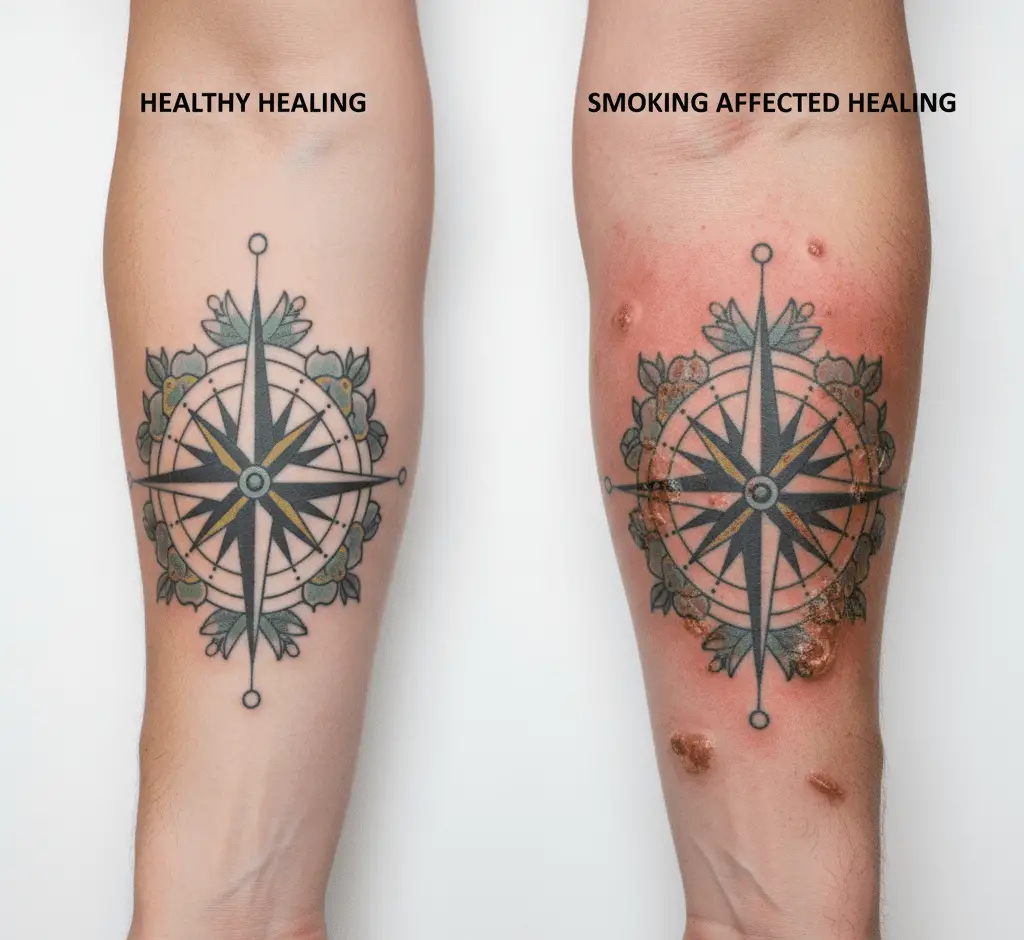
What Changes Can You Expect in a Tattoo if You Smoke?
Smoking may cause noticeable differences in your tattoo’s appearance:
- Colors may fade faster than normal
- Fine details can blur over time
- Scars or uneven texture may develop
- Overall brightness and sharpness of the tattoo may decrease
If you want a vibrant, long-lasting tattoo, avoiding smoking during healing is essential.
Does Nicotine Affect Ink Retention or Color?
Nicotine can directly impact how well your tattoo ink settles in the skin. Poor blood circulation reduces the skin’s ability to retain pigment.
This can cause your tattoo to look dull or patchy, even after it’s fully healed.
Heavy smokers often report needing touch-ups more frequently than non-smokers because the colors fade faster.
How Long Should You Avoid Smoking After Getting a Tattoo?
Experts recommend avoiding smoking for at least 2–3 weeks after getting a tattoo. This is the critical healing period when your skin is most vulnerable.
Ideally, stopping completely for a few months will give your tattoo the best chance to heal evenly and retain its colors.
Even cutting down smoking during this period can make a noticeable difference.
Are Certain Types of Smoking More Harmful to Tattoo Healing?
Yes, not all smoking is equally harmful:
- Cigarettes: Most harmful due to nicotine and chemicals
- Vaping: Can still reduce blood flow and affect healing
- Hookah/Shisha: Long sessions can increase inflammation and sweating
Any form of smoking introduces toxins that slow healing and increase infection risk, so avoiding all forms is the safest choice.
Can Smoking Cause Infection or Complications in Tattoos?
Smoking increases the risk of infection in fresh tattoos. Poor blood circulation weakens your immune response, making it easier for bacteria to enter the tattoo.
Infections can lead to redness, pus, severe pain, and even permanent damage to the tattoo. Proper aftercare plus avoiding smoking drastically lowers this risk.
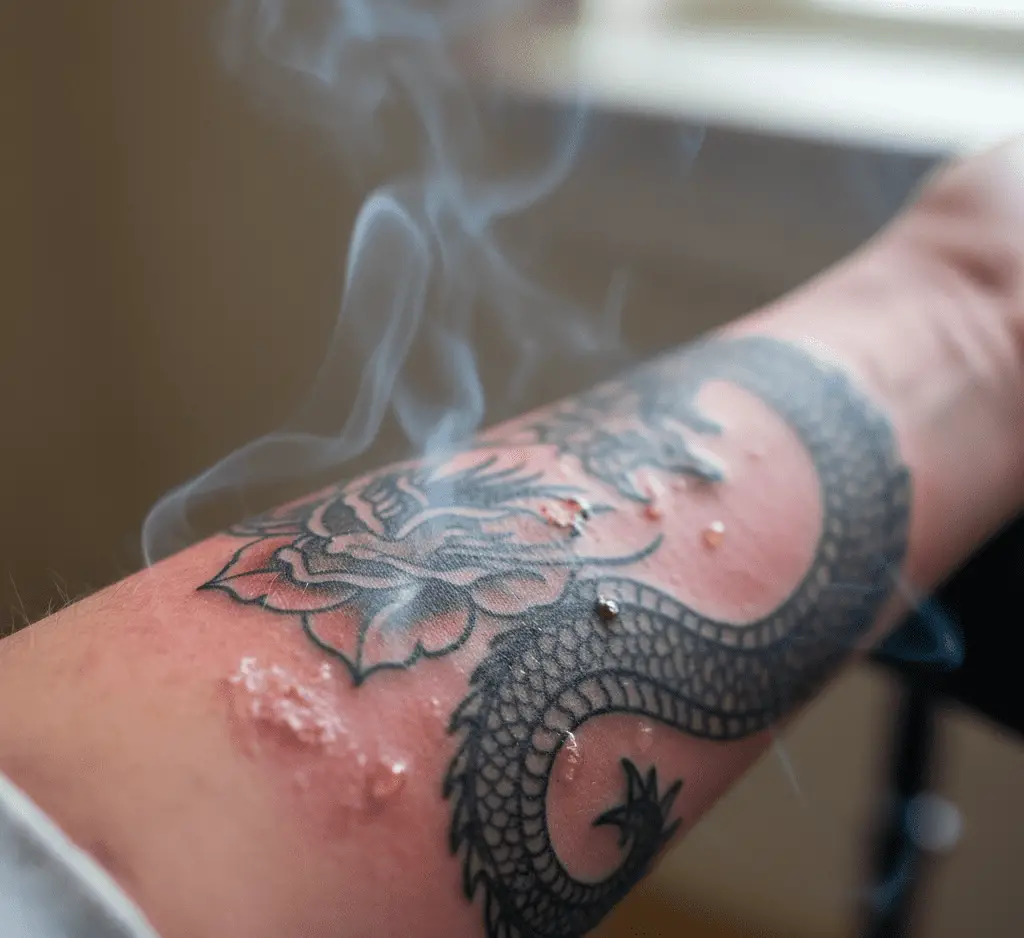
What Are the Long-Term Effects of Smoking on Tattoo Appearance?
Even after healing, smoking can impact your tattoo’s long-term look:
- Faster fading and dull colors
- Blurring of detailed lines
- Uneven texture or scarring over years
- Less vibrant overall appearance compared to non-smokers’ tattoos
If you want your tattoo to stay crisp and bright for years, avoiding smoking is the smartest decision.
Tips for Smokers to Promote Faster Tattoo Healing
If you smoke and can’t quit immediately, these tips can help protect your tattoo:
- Limit smoking as much as possible during the first few weeks
- Keep your tattoo clean and moisturized
- Eat nutrient-rich foods to boost blood circulation
- Stay hydrated to help skin repair
- Avoid scratching or picking at scabs
Final Thoughts
Smoking can have a serious impact on how your tattoo heals and looks over time. It slows down healing, increases infection risk, and can cause fading or dull colors.
If you want your tattoo to heal well and remain vibrant, it’s best to avoid smoking at least during the first few weeks.
Following proper aftercare and giving your body what it needs helps your tattoo stay beautiful for years.
Click Here To See More Articles:
- 16 Cowboy Bebop Tattoo Ideas That Look Absolutely Stunning
- How To Cover Up A Neck Tattoo For Work: Easy Tips For Professionals
- 15 Best Baseball Tattoo Styles Every Fan Should See
- How To Remove Tegaderm From Tattoo Safely (Easy Step-by-Step Guide)
- 15 Stunning Small Hummingbird Tattoo Ideas To Try Now
- Top 16 Year Tattoo Number Designs You’ll Love Forever
- How To Hide A Tattoo On Your Hand Without Anyone Noticing
- 15 Best Female Tattoos That Look Gorgeous On Anyone
- Why Your Tattoo Burns After Lotion And How To Fix It
- Top 18 Beautiful Flower Leg Tattoos For Women
- Can You Tattoo Over A Mosquito Bite? Here’s What You Should Know
- 17 Meaningful Bird Tattoos For Women You’ll Fall In Love With