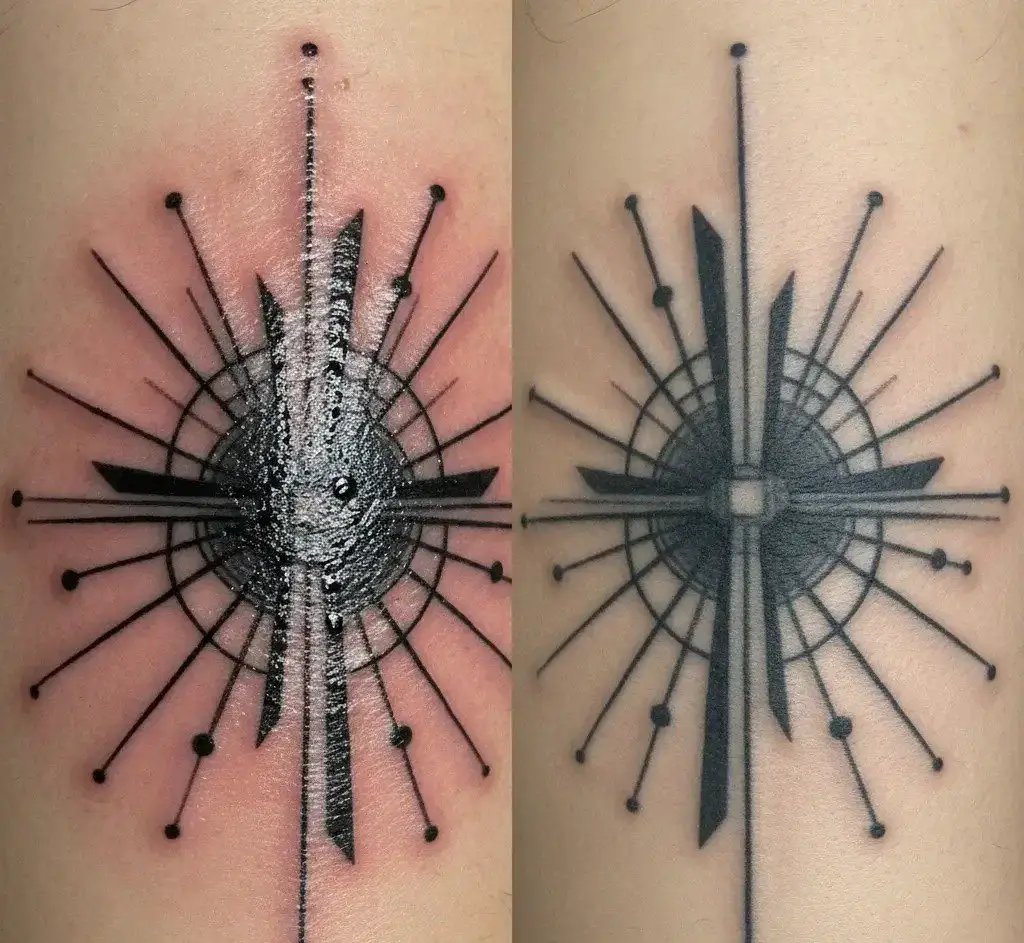
Have you ever looked at your new black tattoo and wondered why it looks so dark, shiny, or even scary, and then noticed older tattoos look calmer and softer?
Many people panic at this stage and think something has gone wrong. In reality, this confusion comes from not understanding the difference between a fresh tattoo and one that has fully healed.
Knowing what changes are normal can save you stress and help you take better care of your skin.
This guide breaks down Fresh Vs Healed Black Tattoo in the simplest way possible.
You’ll learn why fresh tattoos look bold at first, how healing changes their appearance, and what your tattoo should look like at each stage.
Once you understand this process, you’ll stop worrying about fading, peeling, or dull color—and feel confident that your tattoo is healing exactly the way it should.
What Is the Difference Between a Fresh Black Tattoo and a Healed Black Tattoo?
A fresh black tattoo is the stage right after the tattoo is done, when the skin is still open and sensitive.
It usually looks very dark, bold, and slightly raised because the ink is sitting in irritated skin.
A healed black tattoo, on the other hand, has gone through all healing layers and has settled into the skin.
The color may look softer or slightly lighter once healing is complete. Texture also changes, as healed tattoos feel smooth like normal skin. Understanding this difference helps manage expectations.
Both stages are normal and part of the tattoo process. The final look depends heavily on healing and aftercare.
Why Does a Fresh Black Tattoo Look Darker Than a Healed One?
Fresh black tattoos look darker because the skin is inflamed and filled with excess ink and plasma. The top skin layer has not yet regenerated, so the ink appears more intense.
As healing progresses, the skin forms a new layer over the ink, slightly muting the color. This is completely normal and expected.
Swelling and redness also add to the darker appearance. Once peeling finishes, the tattoo may look lighter but more even.
This doesn’t mean the tattoo failed. It simply means the skin has healed properly.
How Long Does It Take for a Black Tattoo to Fully Heal?
A black tattoo usually heals in stages over several weeks. The outer skin typically heals within 2 to 4 weeks.
However, deeper skin layers can take up to 6 to 8 weeks to fully recover. During this time, the tattoo may change in appearance. It can look dull, flaky, or cloudy before settling.
Complete healing depends on aftercare, placement, and skin type. Rushing the process can cause fading or irritation. Patience is key for the best final result.
What Does a Normal Fresh Black Tattoo Look Like During Healing?
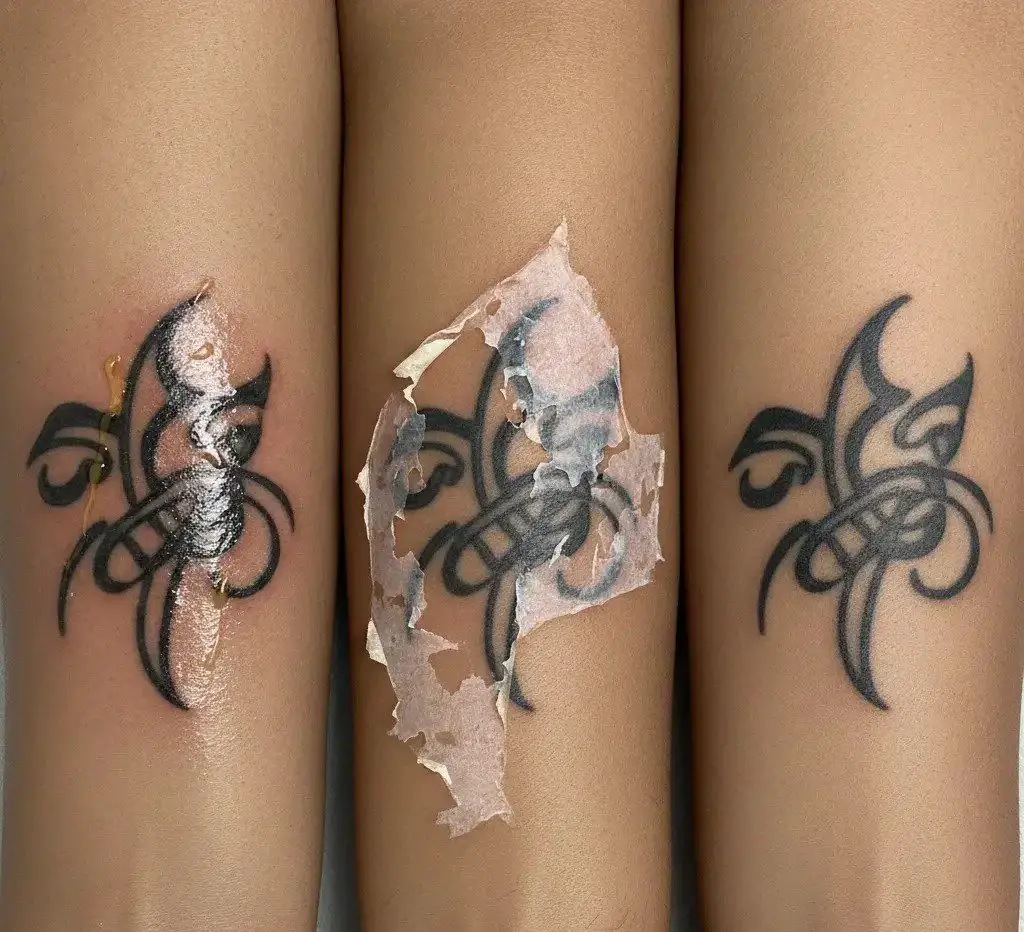
A normal fresh black tattoo goes through several visible changes. At first, it looks shiny, dark, and slightly swollen. Within a few days, redness reduces but peeling begins.
The tattoo may feel itchy and tight during this stage. Thin scabs or flakes often appear and fall off naturally.
Underneath, the ink may look cloudy or faded temporarily. This phase is normal and not a cause for concern. Avoid picking to protect the ink.
How Should a Properly Healed Black Tattoo Look and Feel?
A healed black tattoo should look smooth, even, and settled into the skin. The color may not be as bold as day one, but it should still appear solid.
The skin should feel normal, not raised or sore. There should be no scabs, redness, or itchiness.
A slight softness or sheen is normal in early healing. Any major patchiness or pain may indicate an issue. Proper healing results in clean lines and balanced shading.
Why Does Black Tattoo Ink Fade After Healing?
Black ink fades slightly because the skin regenerates over the tattoo. As new skin cells form, they soften the appearance of the ink.
Sun exposure can also speed up fading. Poor aftercare or picking scabs may pull ink out. Dehydrated skin makes tattoos look dull.
Fading does not always mean the tattoo is damaged. Some lightening is natural and expected. Regular moisturizing and sun protection help maintain depth.
Is It Normal for a Fresh Black Tattoo to Look Shiny or Wet?
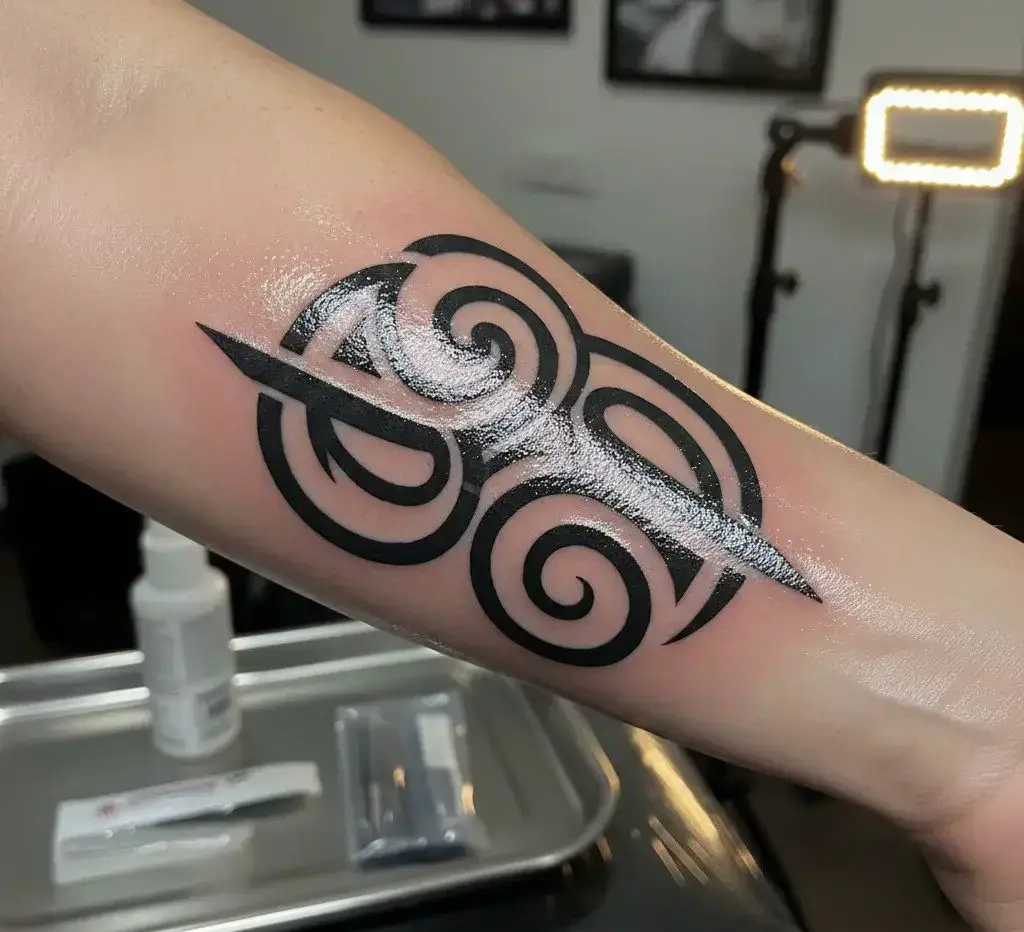
Yes, a shiny or wet look is very common in fresh black tattoos. This happens due to plasma, ink residue, and healing ointments.
The skin is trying to protect itself while repairing damage. The shine usually lasts a few days. Overuse of ointment can also increase shininess.
A thin layer is enough for healing. Once peeling starts, the shine fades naturally. This is a normal part of recovery.
Why Does a Healed Black Tattoo Sometimes Look Gray or Dull?
A healed tattoo may look gray because of dry skin or dead skin buildup. This effect is often called “tattoo haze” or “silver skin.”
It usually fades as the skin fully renews. Lack of moisture can make black ink appear dull. Sun damage may also affect vibrancy.
Using fragrance-free moisturizer helps restore depth. Gentle exfoliation after full healing can help. Most of the time, the color is still intact beneath the surface.
What Are the Healing Stages of a Black Tattoo From Day One to Month One?
Tattoo healing follows a predictable pattern:
- Days 1–3: Swelling, redness, and dark appearance
- Days 4–7: Peeling, flaking, and itchiness
- Week 2–3: Cloudy or dull look as skin regenerates
- Week 4: Surface healing completes
Deeper layers continue healing beyond one month. Each stage is important. Skipping aftercare can affect results. Knowing these stages prevents unnecessary worry.
What Symptoms Are Normal in a Fresh Black Tattoo?
Normal symptoms include mild swelling, redness, and warmth. Itchiness is common during peeling. Slight soreness or tenderness may last a few days.
Clear fluid or plasma leakage is also normal early on. The skin may feel tight or dry. These signs should gradually improve.
If symptoms worsen instead of improving, it may signal a problem. Listening to your body helps ensure safe healing.
What Are Signs That a Black Tattoo Is Not Healing Properly?
Warning signs include severe redness, pus, and increasing pain. Excessive swelling after several days is not normal.
Thick yellow scabs or strong odor may indicate infection. Persistent heat around the tattoo is another concern.
Fever or chills should never be ignored. Uneven ink loss may result from trauma or poor care. Early attention prevents long-term damage. When in doubt, consult a professional.
How Can You Tell If a Black Tattoo Needs a Touch-Up After Healing?
A tattoo may need a touch-up if certain areas look faded or patchy. Lines that appear broken or uneven are common reasons.
Touch-ups are normal and not a failure. Artists expect some ink loss during healing. Wait until full healing before deciding.
Most artists recommend waiting 6–8 weeks. A touch-up restores depth and sharpness. It helps the tattoo age better over time.
Does Skin Type Affect the Look of Fresh Vs Healed Black Tattoos?
Yes, skin type plays a major role in healing and appearance. Oily skin may heal faster but blur fine lines. Dry skin can make tattoos look dull if not moisturized.
Sensitive skin may experience more redness and peeling. Darker skin tones may show softer contrast after healing.
Everyone heals differently. Proper aftercare tailored to skin type improves results. Understanding your skin helps manage expectations.
How Does Aftercare Change the Final Look of a Healed Black Tattoo?
Good aftercare protects ink while skin heals. Cleaning gently prevents infection and ink loss. Moisturizing keeps skin flexible and reduces cracking.
Avoiding sun exposure prevents fading. Tight clothing can rub and damage fresh tattoos. Poor aftercare leads to dull or uneven results.
Consistency is more important than expensive products. Simple, gentle care produces the best outcome. Aftercare directly affects how long the tattoo lasts.
Can Over-Moisturizing Affect the Healing of a Black Tattoo?
Yes, over-moisturizing can be harmful. Too much ointment blocks airflow and traps bacteria. This can delay healing and cause breakouts.
The tattoo may appear soggy or develop thick scabs. A thin layer is always enough. Let the skin breathe between applications.
Balance is key to proper healing. Moisturize only when the skin feels dry.
Why Do Some Black Tattoos Heal Patchy or Uneven?
Patchiness can happen for several reasons. Uneven ink depth during tattooing is one cause. Picking scabs can pull ink out.
Excess sun exposure during healing fades certain areas. Dry skin may heal unevenly. Sometimes the body naturally rejects small ink amounts.
Touch-ups fix these issues easily. Patchy healing is common and usually correctable.
Does Sun Exposure Damage a Fresh or Healed Black Tattoo?
Sun exposure is harmful at all stages. Fresh tattoos are extremely vulnerable to UV damage. Sun can cause fading, irritation, and delayed healing.
Healed tattoos also fade faster without protection. Black ink absorbs heat, increasing damage risk. Always cover fresh tattoos outdoors.
Use sunscreen only after full healing. Sun care preserves tattoo quality long-term.
How Can You Prevent Black Tattoo Fading During Healing?
To reduce fading:
- Keep the tattoo clean and moisturized
- Avoid direct sunlight
- Don’t scratch or peel
- Wear loose clothing
- Follow artist instructions
Consistency is crucial during the first month. Avoid swimming and sweating heavily. Use gentle, fragrance-free products. Small habits make a big difference. Prevention starts on day one.
Is It Safe to Scratch or Peel a Fresh Black Tattoo?
No, scratching or peeling is unsafe. It can pull ink from the skin. This leads to scars or patchy areas. Scratching also increases infection risk.
Itchiness is normal but temporary. Light tapping or moisturizer helps relieve discomfort. Let flakes fall off naturally.
Protecting the skin protects the tattoo. Patience prevents long-term damage.
Can Infection Change the Appearance of a Healed Black Tattoo?
Yes, infections can permanently affect tattoo appearance. They may cause scarring or ink loss. Severe infections distort lines and shading.
Even mild infections can dull color. Early treatment reduces damage. Never ignore worsening symptoms.
Cleanliness and aftercare prevent most infections. A healthy healing process ensures better results. Infections are serious and should be addressed quickly.
What Are the Biggest Risks During the Fresh Black Tattoo Stage?
The biggest risks include infection, ink loss, and irritation. Poor hygiene increases bacterial exposure. Excessive moisture or dryness disrupts healing.
Tight clothing causes friction. Sun exposure damages sensitive skin. Swimming exposes tattoos to harmful bacteria.
Ignoring aftercare instructions leads to problems. The first two weeks are critical. Extra care during this stage protects the final result.
How Long Should You Follow Aftercare Before a Black Tattoo Fully Settles?
Aftercare should be followed for at least 2 to 4 weeks. Even after surface healing, skin remains delicate. Moisturizing should continue beyond peeling.
Sun protection is important long-term. Avoid harsh products until fully healed. Deeper healing takes longer than it looks.
Continuing care ensures better aging. Long-term habits keep tattoos sharp and dark.
When Should You Worry About Color Loss in a Healed Black Tattoo?
Worry if color loss is extreme or uneven. Slight fading is normal after healing. Large missing areas may need attention.
If fading worsens over time, sun damage may be the cause. Dry skin can also affect appearance. Give the tattoo time to settle.
Consult the artist if unsure. Touch-ups often solve color concerns.
What Do Professional Tattoo Artists Say About Fresh Vs Healed Black Tattoos?
Artists emphasize patience and realistic expectations. They explain that fresh tattoos are not final results. Healing always changes appearance slightly.
Professionals stress the importance of aftercare. They also reassure clients about temporary dullness. Touch-ups are part of the process.
Artist advice is based on experience. Trusting professional guidance leads to better outcomes.
What Expert Tips Help Black Tattoos Heal Darker and Last Longer?
Experts recommend keeping skin hydrated and protected. Avoid sun exposure as much as possible. Use mild, fragrance-free products only.
Follow cleaning routines consistently. Don’t rush the healing process. Avoid tight clothing and excessive friction.
Schedule touch-ups if needed. Long-term care preserves contrast. Smart habits keep black tattoos bold for years.